

The fundamentals
What is infrared heat?
The same warmth as the sun. Directly to you.
Infrared heat is not an invention. It is a natural phenomenon. You feel it in the sunshine on a clear winter day, beside an open fire or around a campfire. An Opranic infrared heater uses the same principle to warm you on your terrace, in your conservatory or on your covered patio. Heat travels directly from the source to you, without needing to warm the air in between.
This direct heat transfer is why infrared heating works outdoors where other heating methods do not.
A natural phenomenon
Infrared heat warms you, not the air
Infrared radiation is not an invention. It is a natural phenomenon. The sun emits invisible infrared rays that travel through space and air, converting to heat when absorbed by an object. This transfer of heat does not depend on the surrounding air temperature. You can feel it for yourself on a cold winter day: as soon as the sun comes out, you feel its warmth. The surfaces around you also absorb this energy, warm up and radiate heat back into their surroundings.
Infrared heaters work on the same principle, emitting electromagnetic waves that warm your body and nearby objects rather than the air. This is radiant heat: energy transferred directly from the heat source to whatever needs warming, carried by invisible electromagnetic waves. Conventional heaters rely on convection, using air to carry the heat. That indirect approach leads to energy losses and inefficiency, particularly outdoors.

Infrared radiation warms you directly. Not the air. You.
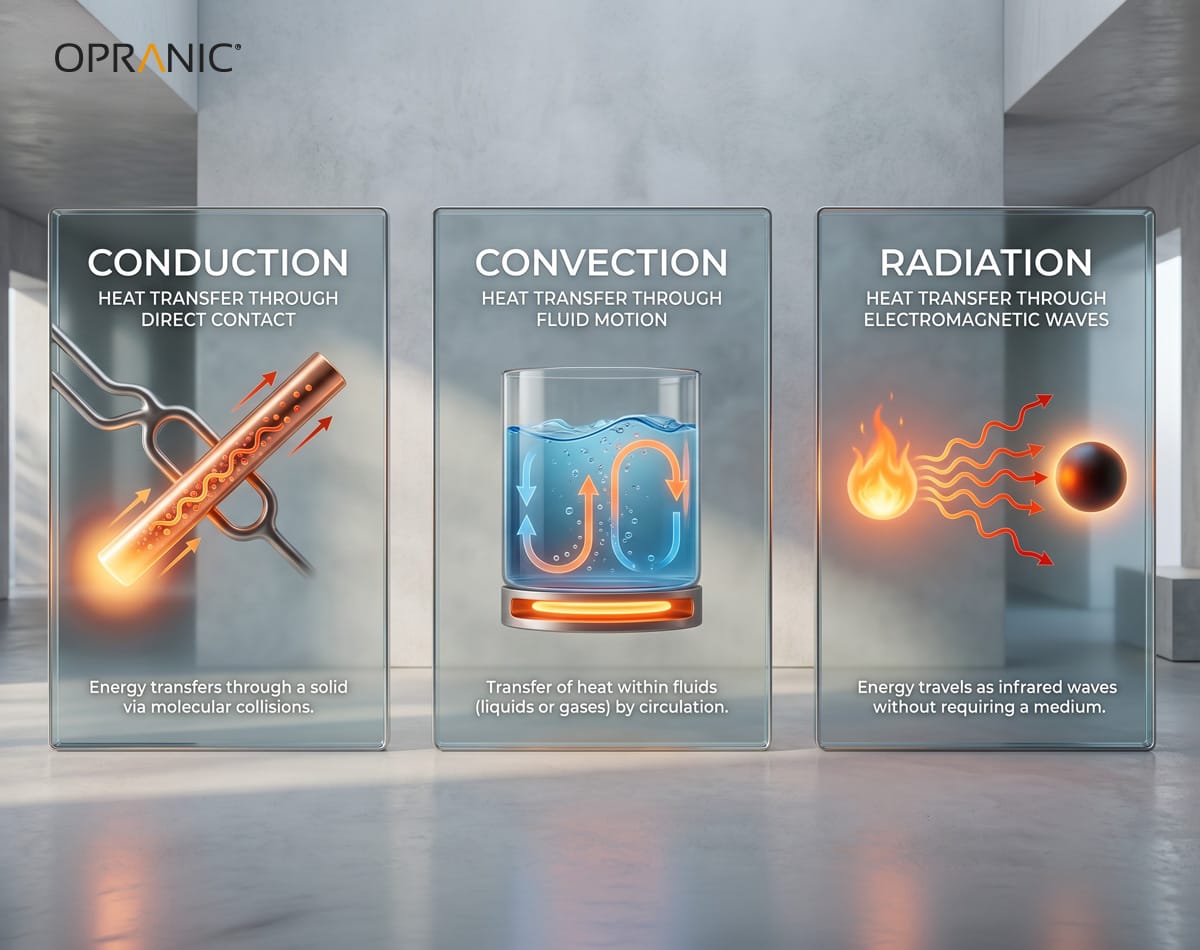
Three methods
Infrared heating versus convection: three ways to transfer heat, one that works outdoors
Heat always moves in one of three ways. Conduction transfers heat through direct contact, as you feel when you hold a warm coffee cup. It works between objects that touch, but it cannot heat your terrace or patio. Convection heats the air. Warm air rises, cools and sinks again. This is how most conventional heating works indoors, where walls and ceilings contain the air. Outdoors, that heat is lost: warm air rises into the sky as the wind brings in cold air to replace it. You pay to heat air that is already leaving your patio.
Radiation transfers energy directly from a source to a surface, without relying on the air between them. This is how the sun warms the Earth across 150 million kilometres of cold space, with no air to carry the heat. Infrared radiation travels to a surface, where it is absorbed as heat. It is the only effective way to heat outdoors, and the principle behind every Opranic heater.
For guidance on choosing the right model for your patio, read our outdoor infrared heater buying guide
The sunlight principle
Why you can feel warm on a mountain in sub-zero temperatures
Infrared radiation belongs to the electromagnetic spectrum, alongside visible light, radio waves and X-rays. It sits just beyond the red end of visible light; the name infrared means “below red”. When an Opranic infrared heater is on, you see a faint red glow. The warmth you feel comes from infrared radiation, which your skin absorbs and converts into heat within your body.
The infrared spectrum covers a broad range of wavelengths, each with different properties. Some are absorbed almost entirely by your skin, producing gentle, comfortable warmth. Others are reflected or can feel prickly. Choosing the right wavelength is the most important design decision in an infrared heater. It is the foundation of Opranic’s engineering approach, built on experience in infrared heating since 2009.

Your body is 80% water.
That determines which wavelength works.

The spectrum
Where infrared sits in the electromagnetic spectrum
Infrared is part of the electromagnetic spectrum, alongside visible light, radio waves and X-rays. It lies just beyond the red end of visible light; the name infrared means “below red”. When an Opranic infrared heater is on, you see a soft orange glow, similar to the embers of a fire. The warmth you feel comes from infrared radiation, which your skin absorbs and converts into heat within your body.
The infrared spectrum covers a broad range, and different wavelengths behave differently. Some are absorbed almost entirely by the skin, producing gentle, comfortable warmth. Others are reflected or can create a prickling sensation. Choosing the right wavelength is the most critical design decision in an infrared heater. It is also the foundation of Opranic’s engineering approach, built on experience in infrared heating since 2009.
For a closer look at the physics of wavelength, surface temperature and absorption, read our technical guide to how infrared heating works.
Water content
Why 2.2 micrometres is the right wavelength for infrared heating
Your body is approximately 70% water. This determines which types of infrared radiation warm you and which do not. If the water in your skin does not absorb the radiation, its intensity makes no difference: it passes through or is reflected away without being converted into heat.
Water absorbs infrared radiation most efficiently at wavelengths of around 2.2 to 3.0 micrometres. At 2.2 micrometres, the radiation is absorbed directly in the outer layers of your skin, where the warmth receptors are located. Rather than being reflected away, it is converted into comfortable warmth. This is why Opranic’s IR-X Carbon Black is engineered to deliver its peak output at this wavelength. All the energy goes where it is needed.
IR-X Carbon Black peak output

Medium-wave radiation is absorbed. Short-wave radiation is reflected away.

Your skin’s natural defences
The skin's natural reflectivity: a protective mechanism
Your skin does not simply absorb all the heat it receives. Millions of years of exposure to sunlight have shaped how it absorbs some radiation and reflects the rest. This natural protective mechanism also means that your choice of infrared heater has a significant effect on the warmth you feel.
Much of the infrared radiation that is too intense or has unsuitable characteristics is reflected by your skin, rather as a light-coloured T-shirt reflects strong midday sunlight. You may feel warmth at close range, but most of the energy never reaches the layers where it can provide warmth. Infrared heat with the right characteristics, such as that from an Opranic infrared heater, is absorbed directly by the outer layers of your skin. The result is a gentle, enveloping warmth, reminiscent of the afternoon sun in September.
100% natural
Infrared heat is a 100% natural form of warmth for your body
Infrared heat is a 100% natural form of warmth for your body. It is the same radiant heat you feel from the sun on a spring day, on your back through a T-shirt in summer, or from a sun-warmed stone long after sunset. An Opranic infrared heater brings that familiar warmth to your patio in September, October and beyond.
The warmth feels gentle and even on your skin. It creates no warm draughts, does not dry out the air and needs no warm-up time. Switch it on and you feel the heat from the first second. The surrounding outdoor air remains unchanged, while the radiant warmth lets you stay outside for another hour.

Air quality
Infrared heating and air quality: worth knowing if you have allergies
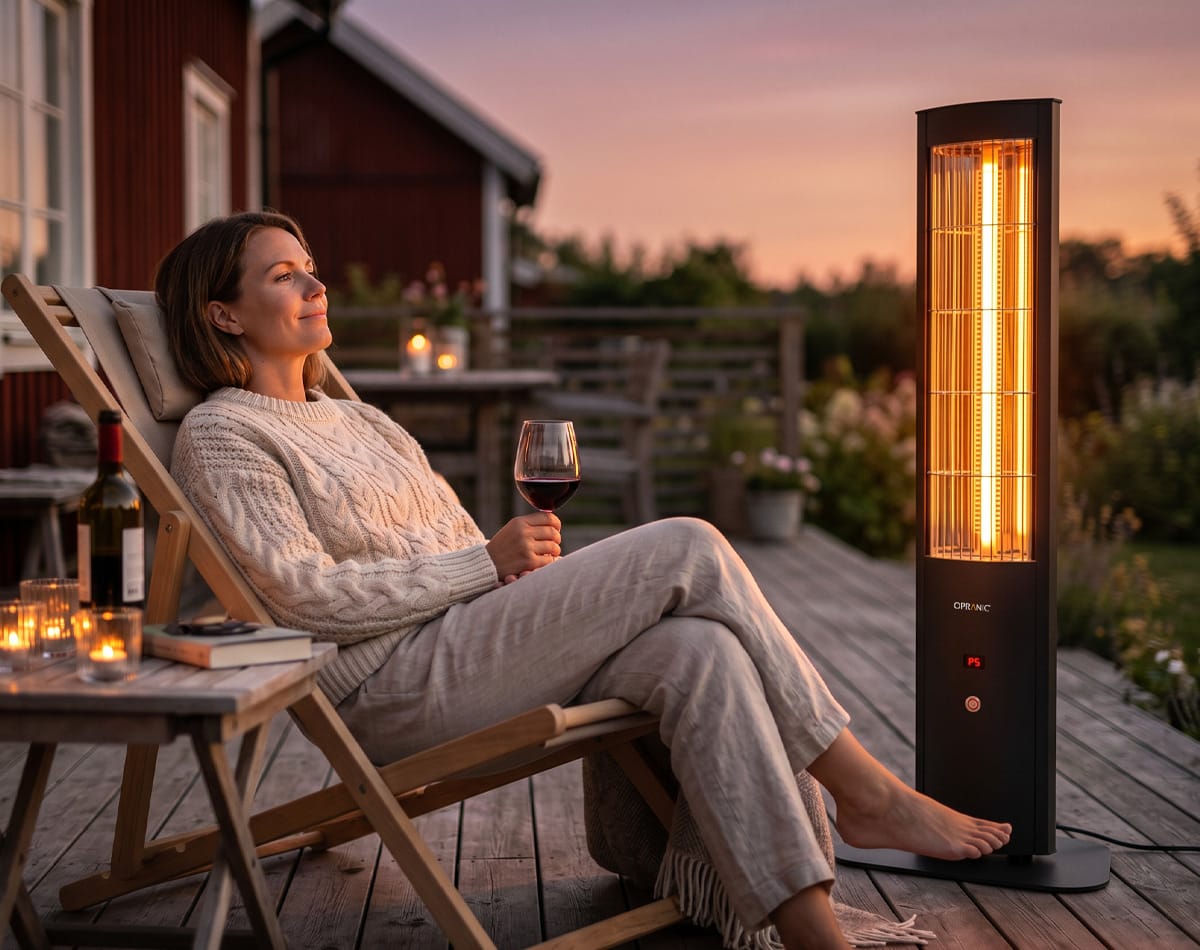
Air quality is easy to overlook. Infrared heating warms surfaces and people directly instead of blowing warm air around. With no fan and no airflow, less dust and pollen is stirred up. If you have allergies, that is worth knowing, in your living room and on your patio.
Indoors, an Opranic heater delivers quiet, comfortable infrared warmth without drying out the air. It stirs up less dust and does not circulate pollen entering through open windows. You also avoid the dry, stuffy conditions that radiators often create when running at full power. Without forced airflow, the room feels more like a mild spring day than an overheated enclosure.
Outdoors, the contrast with a gas patio heater is particularly clear. An Opranic infrared heater produces no combustion gases, water vapour or odour. There is no open flame and no combustion to affect the air around your table. The outdoor air stays as it is, while infrared heat warms you directly.
Infrared heating is the only rational heating technology for outdoor use.
Outdoor performance
Why infrared heating works better outdoors
Infrared heating is the only heating technology designed for genuinely effective outdoor use. The difference lies not just in the physics, but in how an infrared heater performs in the wind and changeable weather of a northern European climate.
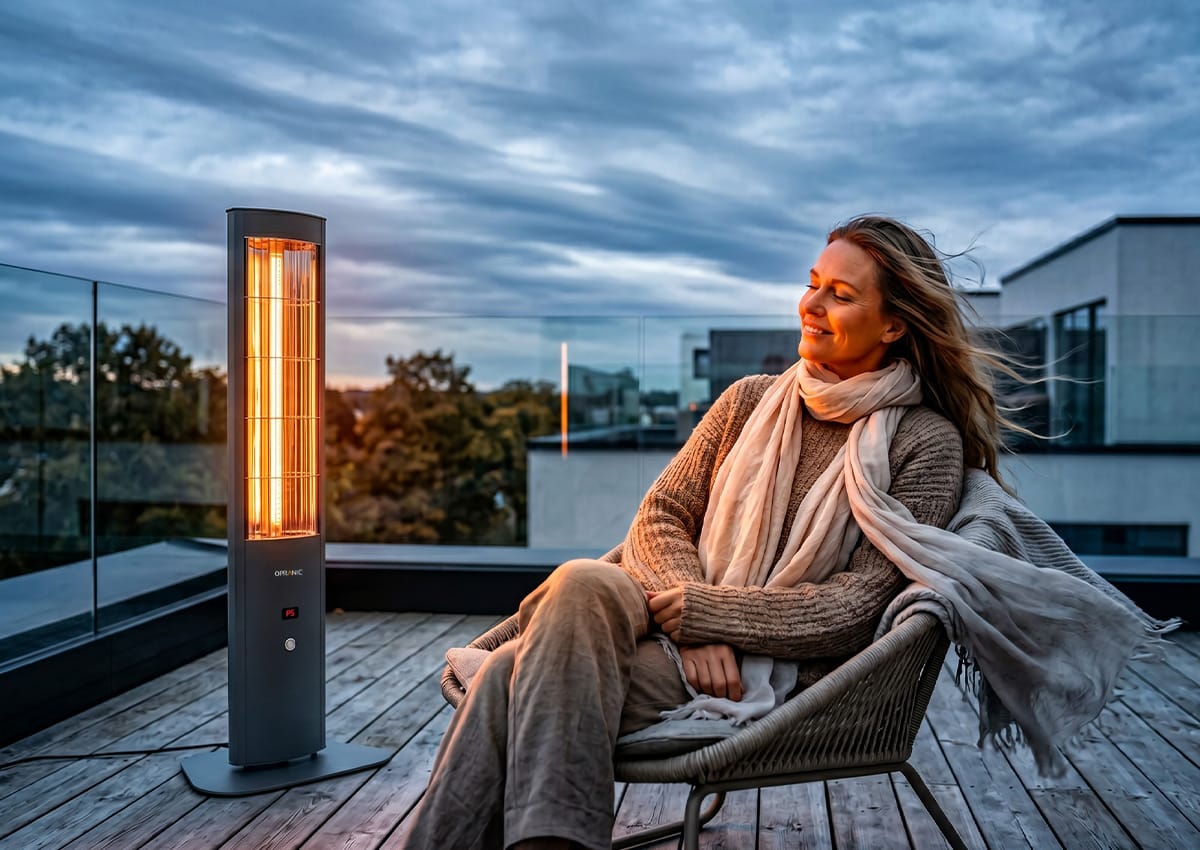
Wind carries warm air away from your patio almost immediately, as air movement equalises temperatures. Infrared heating works differently. Radiation travels in straight lines from the heater to you, whether the surrounding air is moving or still. Even in gusty conditions, you can feel the warmth on your shoulders and hands.
Opranic also builds its infrared heaters for year-round use in northern European conditions. The IP65 rating means they can withstand rain, sleet and salt spray carried by coastal winds. There is no warm-up time, no gas cylinder to replace and no flame to shield from the wind. You feel the warmth from the first second, from early spring through late autumn and often well into winter.

Independent research
Independent research behind Opranic infrared heating: LTU and Vattenfall 2019
In 2019, an independent study at Luleå Tekniska Universitet was conducted in collaboration with Vattenfall R&D and Opranic. Later published in the Journal of Cold Regions Engineering, the study investigated how infrared heating could remove ice from wind turbine blades in Swedish winter conditions. Testing took place in a climate chamber at the Arctic Falls facility in Piteå, at temperatures as low as minus 30 degrees Celsius.
The researchers compared different types of infrared heating and identified wavelength and distance as the two parameters with the greatest influence on performance. Longer wavelengths, specifically the medium-wave technology Opranic uses, allowed the surface to absorb heat more effectively rather than reflect it. These findings independently support the engineering principles behind Opranic infrared heaters, informed by experience in infrared heating since 2009. Read the full thesis as a PDF.
Infrared heating at comfort levels has also been assessed for safety by ICNIRP, the international expert body on non-ionising radiation. Its guidelines form the basis of recommendations from the Swedish Radiation Safety Authority and confirm that you can safely sit beneath a patio heater every day.
Sources & research partners
- Luleå Tekniska Universitet
- Vattenfall R&D
- Journal of Cold Regions Engineering (ASCE, 2022)
- ICNIRP (safety guidelines)
Energy efficiency
Infrared heating converts 96% of energy into heat
An Opranic infrared heater converts up to 96% of the electricity you pay for directly into infrared heat. The remaining energy is emitted as the soft orange glow you see when you switch it on, a visible companion to the warmth on a cool evening.
No warm-up time, no energy blown away by the wind, no idling. Press the button and the heat is there immediately, directed exactly where you need it. On a typical patio, running costs are a few kr per hour, often a fraction of the cost of running a gas patio heater.
It is the difference between turning a heater up to full power and hoping for warmth, and directing precisely the right amount of infrared heat where it is needed.
converted into infrared heat
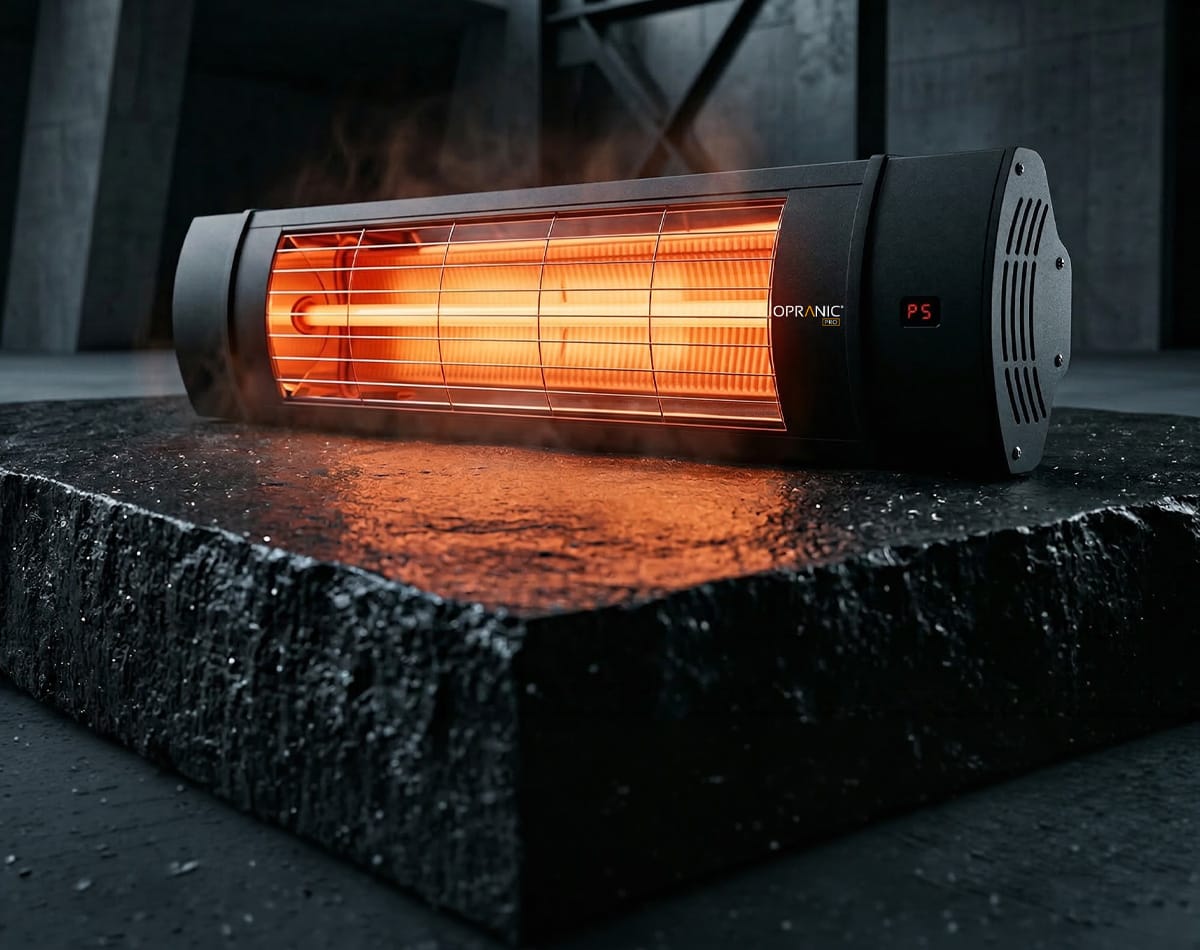
96% of the energy you pay for becomes heat in your body.
The system
Opranic infrared heating is a system, not just a heater
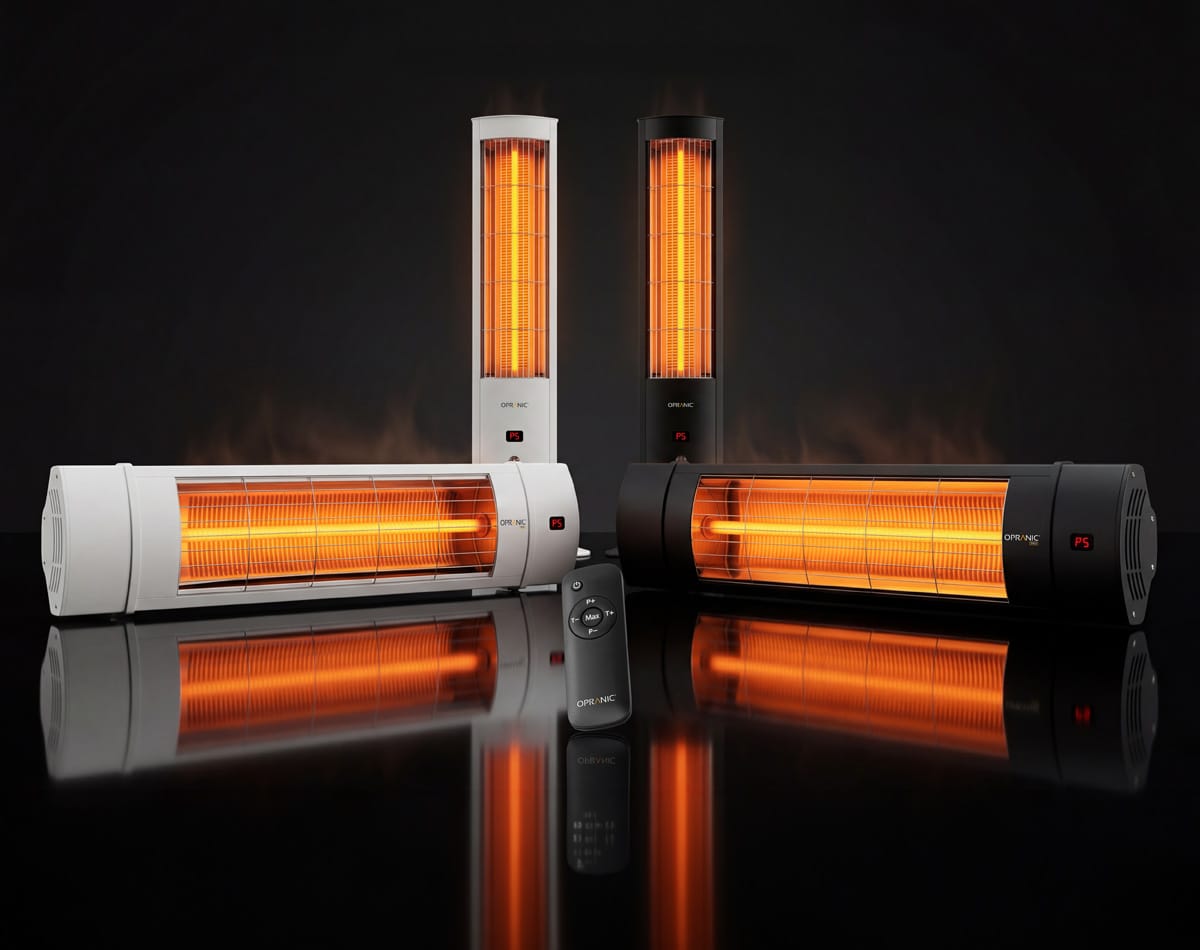
IR-X Carbon Black is at the heart of Opranic infrared heating. But the element cannot deliver its full performance alone. It needs an optimised parabolic reflector to direct radiation where it is needed, a housing and stainless steel side reflectors to retain energy, and electronics that precisely control its surface temperature to maintain the optimal wavelength range.
Drawing on experience in infrared heating since 2009, Opranic develops and refines these parts as an integrated system, not as separate components. This engineering approach underpins the consistently stronger performance of Opranic infrared heaters, both in independent academic research and on patios from Scandinavia to the Mediterranean. The difference lies in the system as a whole, not in any single component.
To choose the right infrared heater for your patio, read our outdoor infrared heater buying guide. To explore the company and the engineering approach behind its products, discover why Opranic.